


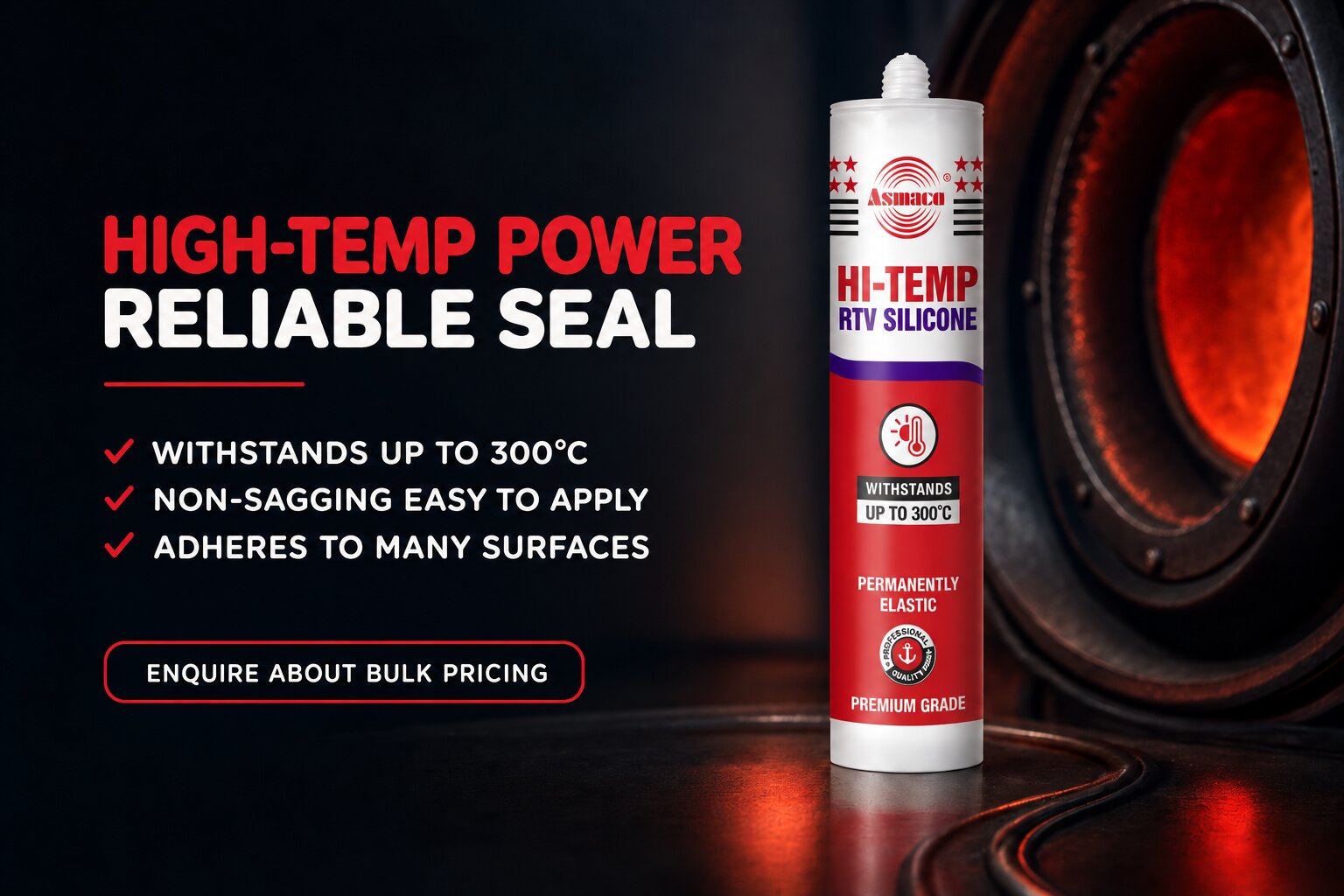
Heat changes how a sealant performs. A product that works on a cool joint can fail quickly near engines, ovens, ducts, heaters, or industrial equipment. That is why choosing the right high temp rtv silicone sealant matters for contractors, maintenance teams, distributors, and bulk supply buyers globally. It should hold its shape, stay flexible, and keep sealing under thermal stress. Many standard sealants can harden, crack, shrink, or lose adhesion in these conditions. RTV silicone is a practical option for jobs that need reliable performance under heat.
Why Standard Sealants Fail in High Heat
Many general-purpose sealants are designed for normal service conditions. In high-temperature areas, they can soften, dry out, or break down. Some lose adhesion on metal or glass. Others shrink as they cure or age, which can reopen the joint. Heat cycling makes this worse. A component expands when hot and contracts when cool. If the sealant cannot move with it, the bond weakens. For repair work, that can mean leaks, downtime, and repeat labour. A sealant for high temperature use needs to stay stable through repeated exposure, not just on the first day.
What Makes RTV Silicone Different
RTV stands for Room Temperature Vulcanizing. A high temp RTV silicone sealant cures at room temperature using moisture in the air. It does not need mixing and is supplied as a single-component product, which keeps application simple. Once cured, it forms a rubber-like seal that remains flexible. That flexibility helps it handle vibration and temperature changes better than many standard sealants. It also provides adhesion to metals, glass, ceramics, and many plastics. For teams that need a dependable seal under heat, RTV silicone offers a useful balance of strength, movement, and resistance.
Where It Is Used
A high temp rtv silicone sealant is used across many repair and maintenance jobs globally. In automotive work, it is used for engine parts, transmissions, exhaust systems, and high-temperature gasket areas. In industrial settings, it is used for flanges, pipes, pumps, housings, and heat exchangers. HVAC installers use it for joints and gaps in heating and cooling equipment. It is also suitable for ovens, stoves, heaters, ducts, chimneys, and some marine engine applications. Any job that needs heat resistance, flexibility, and a non-sagging finish can benefit from the right silicone sealant.
ASMACO Hi-Temp RTV Silicone
ASMACO Hi-Temp RTV Silicone is a professional-grade option for demanding heat applications. It is a single-component, non-sagging RTV silicone sealant that cures with ambient moisture. It is designed for continuous temperatures up to 300°C. It is non-corrosive and intended to resist aging, cracking, and shrinking over time. It also offers weather, UV, and ozone resistance for exposed applications. For procurement teams, it is a practical choice for repeat use across automotive, industrial, HVAC, appliance, and general sealing jobs. Learn more on the ASMACO Hi-Temp RTV Silicone product page or review our general products catalogue.
How to Apply It
Start with a clean, dry surface. Remove oil, dust, old sealant, and loose material. Cut the nozzle to the required bead size. Apply the sealant evenly and avoid gaps. Because it is non-sagging, it can be used on vertical or overhead joints with better control. Assemble the parts before skinning begins, then allow it to cure in air. Do not overload the joint. Use only the amount needed to form a continuous seal. For product questions or support, contact our team through the contact page or browse our acetoxy sealants category.
Conclusion
For high-heat sealing jobs, standard products often fall short. RTV silicone provides the heat resistance, flexibility, and durability these applications need. ASMACO Hi-Temp RTV Silicone is built for that job.